
As I stood in my kitchen, the aroma of caramelizing onions danced through the air, transporting me to a cozy eatery tucked away in Tokyo. This Gyudon Japanese Beef Bowl recipe embodies the heart of home-cooked comfort, featuring tender, thinly sliced beef immersed in a sweet and umami-rich sauce, served atop fluffy Japanese rice. With the allure of a delicious meal that can be whipped up in no time, this dish is perfect for busy weeknights when you crave something satisfying yet quick to prepare. Plus, it’s not just about beef; you can easily swap in mushrooms or tofu for a vegetarian delight. Are you ready to take your taste buds on a flavorful journey to Japan right from your home kitchen?
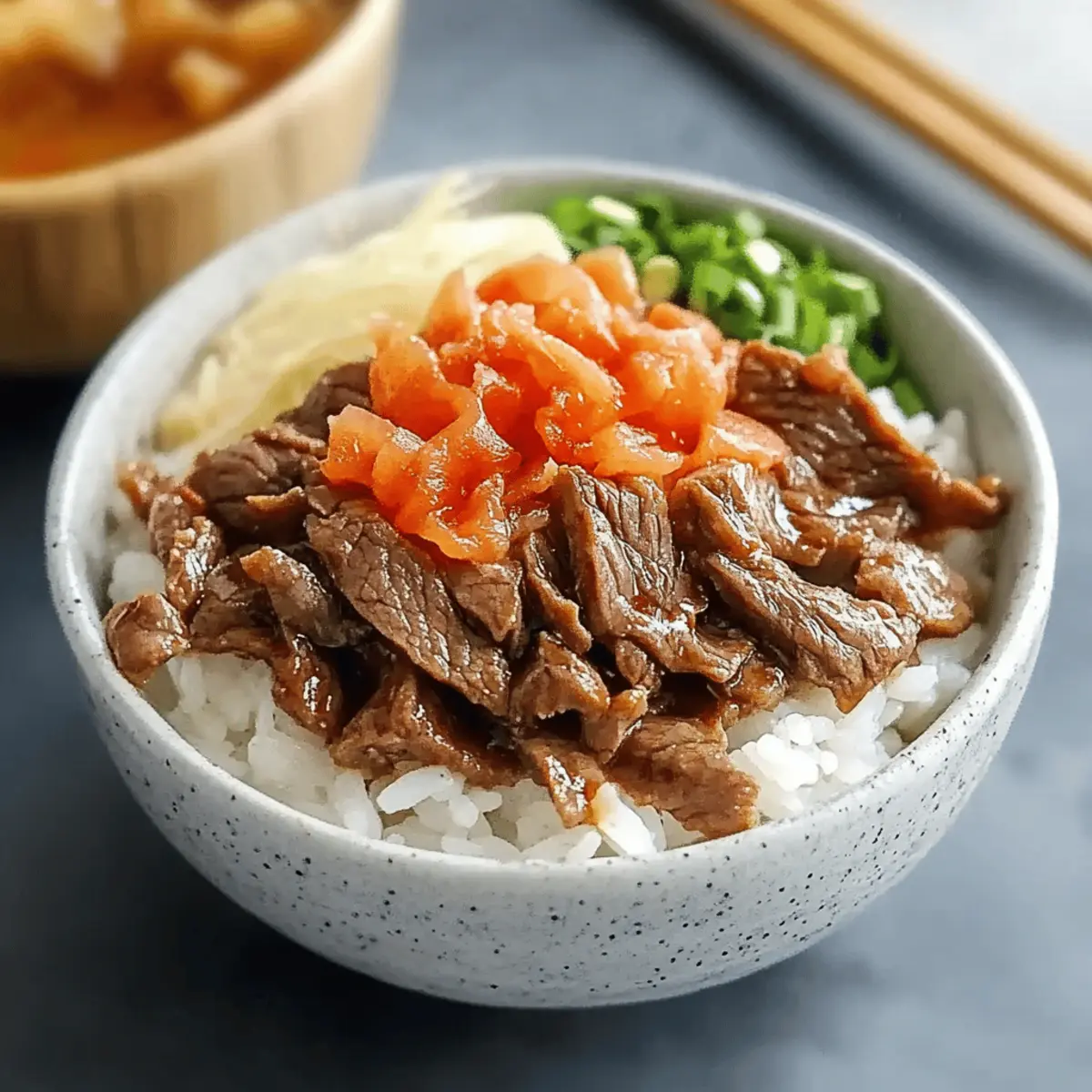
Why Is Gyudon My Go-To Meal?
Simplicity: This recipe offers a quick and easy way to enjoy authentic Japanese flavors without spending hours in the kitchen.
Flavor Explosion: The tender beef combines with a sweet and umami-rich sauce, making every bite a delightful experience.
Versatile Options: Whether you're a meat lover or prefer vegetarian meals, you can easily adapt the ingredients for a delicious Gyudon bowl tailored to your preferences.
Crowd-Pleaser: Perfect for family dinners or a cozy date night, this dish is sure to impress anyone at your table.
Comforting Experience: The fluffy Japanese rice soaked in sauce creates that ultimate comfort food vibe, ideal for relaxation after a long day.
Elevate your dinner routine with this comforting dish—it's just what you need on busy weeknights, or for making the perfect cozy meal!
Gyudon Japanese Beef Bowls Ingredients
For the Beef
- Thinly Sliced Beef – Essential for creating tender bites; ribeye or sirloin is recommended for the best flavor.
- Mushrooms, Tofu, or Seitan – Great vegetarian alternatives to beef that absorb the delicious sauce beautifully.
For the Sauce
- Onion – Adds sweetness and depth; slice thinly for even cooking.
- Olive Oil – Used for sautéing onions; any cooking oil can serve this purpose.
- Water – Helps control the sauce thickness and pulls flavors from the beef.
- Dashi Powder – Provides a central umami flavor; substitute with low-sodium broth if needed.
- Sugar – Balances flavors for a perfect sauce; brown sugar offers a deeper taste.
- Sake – Adds depth to the sauce; dry white wine works as an alternative.
- Mirin – Contributes sweetness and flavor; a staple in Japanese cooking.
- Ginger Juice – Enhances aroma and depth; freshly grated ginger can be a substitute.
- Soy Sauce – Essential for saltiness and complexity; opt for low-sodium if preferred.
For Serving
- Cooked Japanese Rice – The comforting base of the dish; consider brown rice for a healthier option.
- Thinly Sliced Scallions – Fresh garnish that adds both texture and flavor.
- Red Pickled Ginger – Provides a tangy contrast and vibrant color; can be omitted if unavailable.
Step‑by‑Step Instructions for Gyudon Japanese Beef Bowls
Step 1: Sauté the Onions
Heat 2 tablespoons of olive oil in a large skillet over medium heat. Once the oil shimmers, add thinly sliced onions and sauté for 3-4 minutes until they turn translucent and fragrant. This process caramelizes the onions slightly, enhancing their sweetness, which will elevate the overall flavor of your Gyudon Japanese Beef Bowls.
Step 2: Prepare the Sauce
Add 1 cup of water to the skillet with the sautéed onions. Then, incorporate 1 teaspoon of dashi powder, 1 tablespoon of sugar, 1 tablespoon of sake, 1 tablespoon of mirin, 1 tablespoon of ginger juice, and 2 tablespoons of soy sauce. Stir the mixture, allowing it to blend well before bringing it to a gentle simmer. This savory-sweet sauce is crucial for your Gyudon.
Step 3: Cook the Beef
Once the sauce starts to simmer, add 8 ounces of thinly sliced beef to the pot. Cook for about 5 minutes, stirring occasionally to ensure even cooking and that every slice absorbs the rich sauce. Keep an eye on the beef; it should turn a lovely deep brown and become tender. The aroma of the Gyudon will fill your kitchen!
Step 4: Serve with Rice
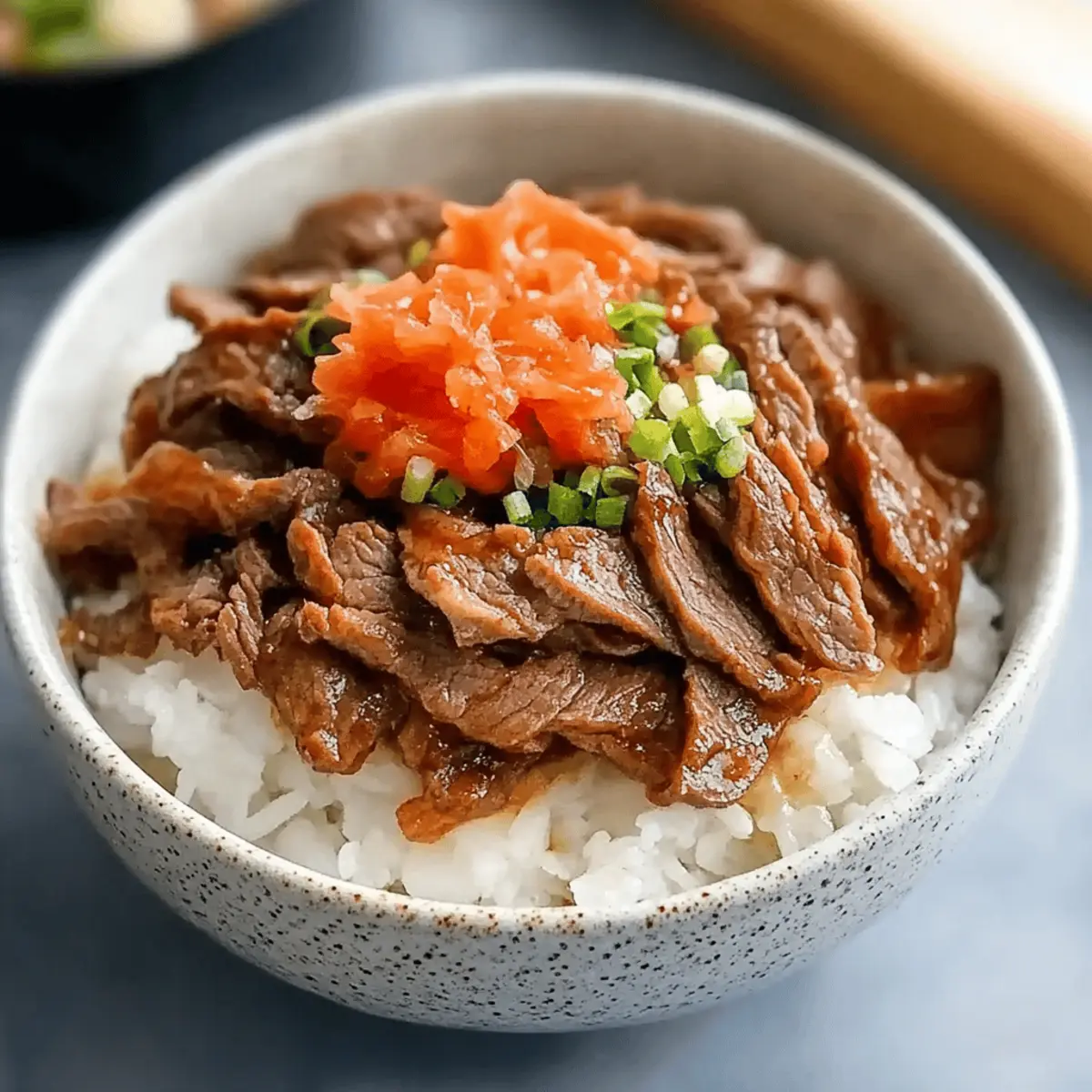
Prepare bowls of warm, cooked Japanese rice as a base for your Gyudon. Carefully spoon the cooked beef and sauce over the rice, allowing the sauce to soak in for flavor. For a finishing touch, garnish with thinly sliced scallions and a sprinkle of red pickled ginger for a pop of color. Savor the comforting experience of your homemade Gyudon!
Expert Tips for Gyudon Japanese Beef Bowls
-
Choose Quality Beef: Select ribeye or sirloin for the best flavor and tenderness in your Gyudon. Fresh ingredients make all the difference!
-
Slice Thinly: For the beef to cook evenly and tenderly, ensure it’s sliced as thinly as possible. If using alternative proteins like mushrooms, aim for uniform sizes too.
-
Don’t Rush the Onions: Sauté the onions until they're translucent to enhance their sweetness. This step is key to achieving the rich depth of flavor in your sauce.
-
Simmer Gently: Bring the sauce to a simmer rather than a boil to preserve the tender texture of your beef. Overcooking can toughen it.
-
Adjust Seasoning to Taste: Personalize your Gyudon by adjusting the sugar or soy sauce according to your preference. Taste as you go!
-
Garnish Wisely: Finish your Gyudon with fresh scallions and pink pickled ginger. They add lovely crunch and vibrant color to contrast the savory-rich dish.
Gyudon Japanese Beef Bowls Variations
Feel free to make this Gyudon dish your own by exploring these exciting variations! Your kitchen will be filled with a symphony of flavors that can delight any taste bud.
-
Vegetarian Option: Use mushrooms, tofu, or seitan instead of beef for a plant-based take on this comforting bowl. These ingredients soak up the savory sauce well, ensuring you won’t miss the meat!
-
Egg Addition: Top your Gyudon with a soft-boiled or poached egg for added creaminess. The richness of the yolk will elevate the overall flavor profile and texture of the dish.
-
Mixed Veggies: Toss in seasonal veggies like bok choy or bell peppers to boost nutrition and add vibrant colors. Not only do they provide an extra crunch, but they also create a lovely fresh contrast to the beef.
-
Spicy Kick: Add a splash of chili oil or sliced fresh chilies for some heat. It's an exciting way to heat things up while enjoying the comforting qualities of Gyudon.
-
Broth Boost: Swap water with homemade or store-bought broth for an extra layer of umami flavor. A rich broth can elevate the sauce to new heights, making every spoonful delicious.
-
Rice Upgrade: Instead of regular Japanese rice, try using brown rice for a nuttier flavor and a healthier option. It complements the savory sauce nicely while adding a bit more texture.
-
Kombu Flavor: If you have kombu on hand, include a piece while simmering the sauce for a deeper umami flavor. This ingredient is a traditional staple in Japanese cooking and will enhance the overall experience.
Whether you're looking for a vegetarian alterative or craving a spicy twist, these variations will help you create a personalized Gyudon experience. Happy cooking!
Make Ahead Options
Preparing Gyudon Japanese Beef Bowls ahead of time can save you precious minutes on busy weeknights! You can slice the beef (or mushrooms, tofu, or seitan) and store it in an airtight container in the refrigerator for up to 24 hours. The sauce, made with onions, water, dashi powder, sugar, sake, mirin, ginger juice, and soy sauce, can also be prepped and refrigerated for up to 3 days; just ensure it's cooled before transferring to a container. When you’re ready to serve, simply heat the sauce, add the beef, and simmer until everything is heated through—this way, you’ll still enjoy that delicious, comforting flavor without the last-minute stress!
How to Store and Freeze Gyudon Japanese Beef Bowls
Fridge: Store leftover Gyudon in an airtight container for up to 2 days. Keep the rice separate to maintain its fluffy texture.
Freezer: For longer storage, freeze the beef and sauce in an airtight container for up to 3 months. Thaw overnight in the fridge before reheating.
Reheating: Gently reheat the Gyudon in a skillet over low heat or in the microwave, ensuring the beef is heated through without overcooking.
Room Temperature: It’s best to avoid leaving Gyudon at room temperature for more than 2 hours to prevent spoilage. Enjoy it fresh for the best flavor!
What to Serve with Gyudon Japanese Beef Bowls
Experience a delightful array of side dishes that perfectly accompany the warm, savory embrace of your Gyudon.
-
Miso Soup: A classic pairing that adds a comforting warmth and a hint of umami to your meal; it balances the richness of the Gyudon beautifully.
-
Steamed Broccoli: Fluffy rice and beef complement the fresh crunch of broccoli; drizzle with a splash of soy sauce for extra flavor.
-
Japanese Pickles: Their tangy, vibrant flavors contrast splendidly with the sweetness of the Gyudon, bringing a refreshing zing to your plate.
-
Edamame: Lightly salted and served warm, these vibrant green beans offer a pop of flavor and protein, complementing the hearty beef bowl.
-
Sesame Spinach Salad: Tossed in a light sesame dressing, this salad adds brightness and texture, enhancing your meal experience with freshness.
-
Fried Egg: Topping your Gyudon with a runny fried egg adds a luscious richness that melds into the sauce, creating a delightful bite.
-
Cold Sake: Savor chilled sake alongside your Gyudon for a traditional touch; it enhances the flavors while providing a relaxing dining experience.
-
Matcha Ice Cream: Finish with a scoop of this creamy dessert; its subtle green tea flavor and sweetness provide the perfect end to your meal, balancing the richness of the Gyudon.
Gyudon Japanese Beef Bowls Recipe FAQs
How do I select the best beef for Gyudon?
Absolutely! For Gyudon, I highly recommend using ribeye or sirloin, as these cuts are naturally tender and packed with flavor. Look for beef with a good amount of marbling; this fat will melt and keep the meat juicy during cooking. Thin slicing is key, so ask your butcher to slice the meat for you if needed!
How should I store leftover Gyudon?
To maintain the delicious flavors of your Gyudon, store leftovers in an airtight container in the refrigerator for up to 2 days. I suggest keeping the sauce and rice separate to prevent the rice from becoming mushy. When ready to enjoy, simply reheat in a skillet over low heat or in the microwave!
Can I freeze Gyudon, and if so, how?
Yes, you can freeze Gyudon! For the best results, freeze the beef and sauce together in an airtight container for up to 3 months. To thaw, simply transfer it to the fridge overnight. When you're ready to enjoy, reheat on the stovetop directly from frozen (just add a splash of water if it thickens too much), making sure it's heated thoroughly without overcooking the beef.
What if my Gyudon sauce is too salty?
If you've found your Gyudon sauce too salty, don't worry—there's a fix! You can add a little water to dilute the sauce and balance the saltiness. Alternatively, incorporating a small pinch of sugar can help to mellow out the salt flavor. Just remember to taste and adjust as needed!
Are there any dietary considerations I should be aware of for Gyudon?
Yes, definitely! For those with dietary restrictions, it's important to know that traditional Gyudon features soy sauce and sake, which contain gluten. Opt for gluten-free soy sauce or tamari if that’s a concern. Also, if you're preparing this meal for pets, remember that onions and certain seasonings can be harmful to them. Always check ingredients and adjust as necessary.
Can I make a vegetarian version of Gyudon?
Very much so! You can create a delightful vegetarian Gyudon by substituting the beef with hearty mushrooms, tofu, or seitan. Simply follow the same preparation steps, ensuring the protein substitutes absorb the flavorful sauce. Don’t forget to maintain balance; you might want to increase the umami content with a bit more dashi or broth. Enjoy experimenting!
Indulge in Gyudon Japanese Beef Bowls for Quick Comfort
Ingredients
Equipment
Method
- Heat 2 tablespoons of olive oil in a large skillet over medium heat. Add thinly sliced onions and sauté for 3-4 minutes until translucent and fragrant.
- Add 1 cup of water to the skillet, followed by 1 teaspoon of dashi powder, 1 tablespoon of sugar, 1 tablespoon of sake, 1 tablespoon of mirin, 1 tablespoon of ginger juice, and 2 tablespoons of soy sauce. Stir well and bring to a gentle simmer.
- Once the sauce simmers, add 8 ounces of thinly sliced beef and cook for about 5 minutes, stirring occasionally until the beef is tender and deep brown.
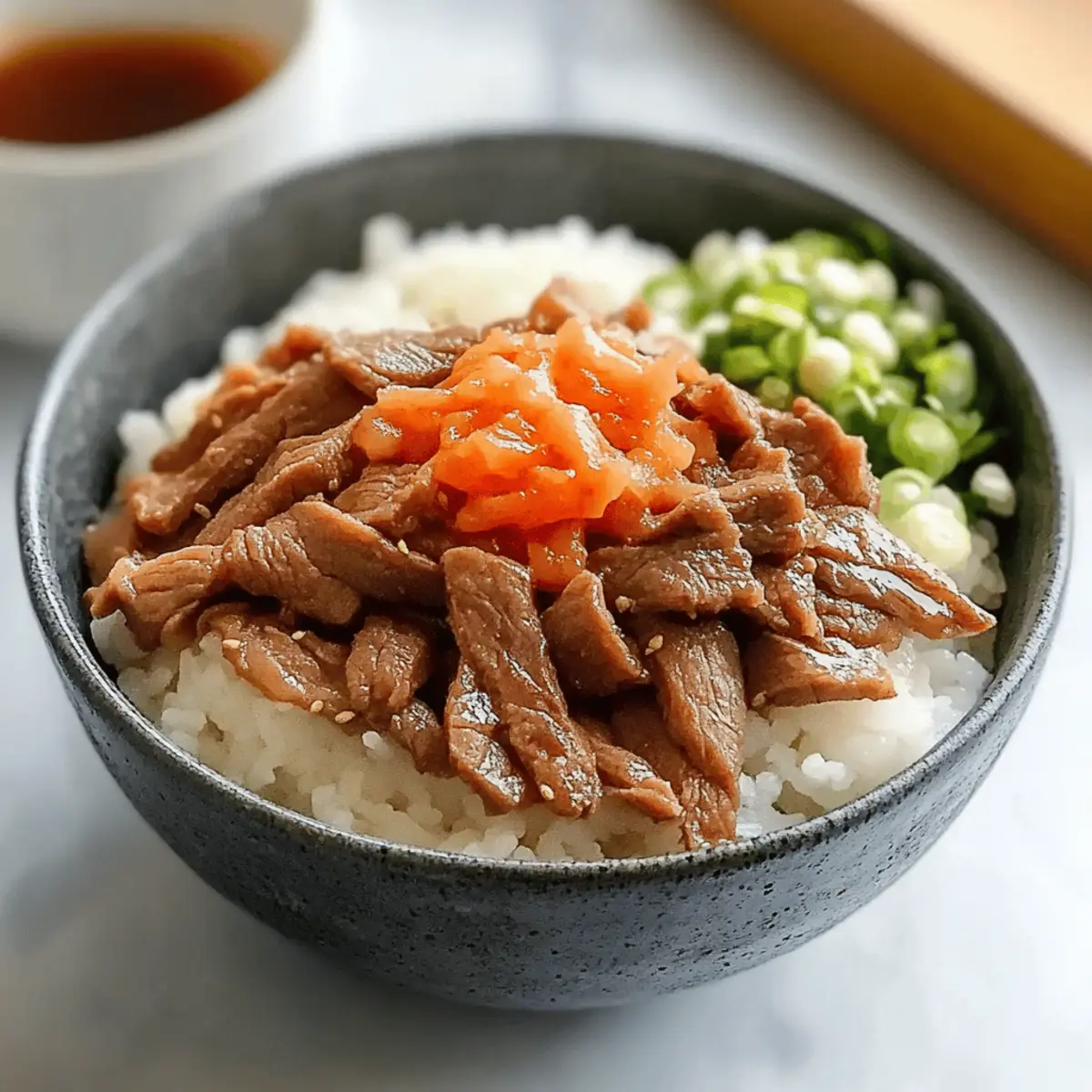
- Prepare bowls of warm, cooked Japanese rice. Spoon the beef and sauce over the rice and garnish with scallions and red pickled ginger.



Leave a Reply