
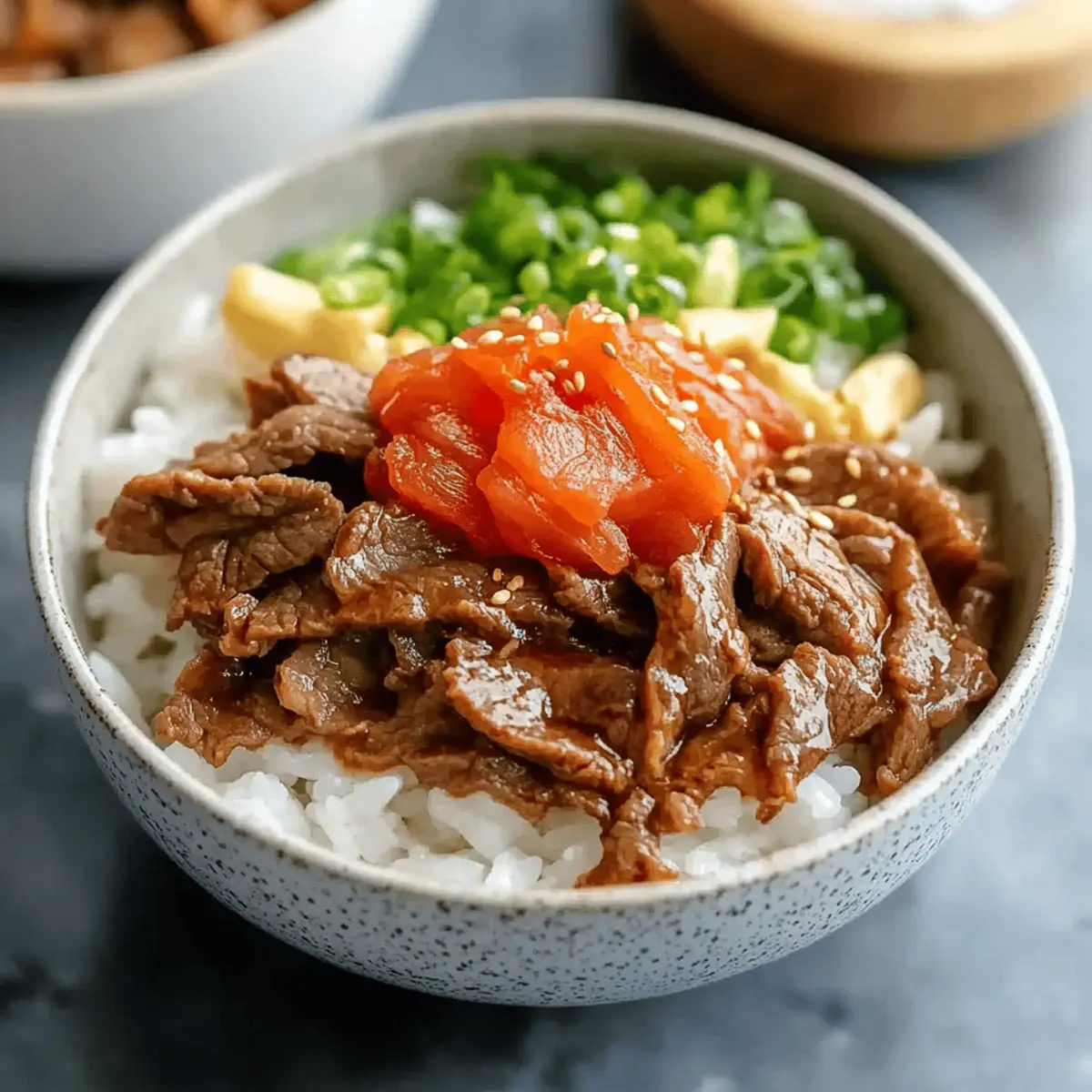
When I first tasted Gyudon Japanese Beef Bowls at a bustling izakaya in Tokyo, the comforting combination of tender beef and fragrant rice swept me off my feet. It’s a dish that encapsulates home and warmth, and I knew I had to replicate that magic in my own kitchen. This recipe not only brings quick satisfaction to busy weeknights but is also incredibly adaptable—perfect for those who love to experiment with ingredients. Whether you’re craving something meaty or looking for a vegetarian twist, these Gyudon bowls can easily cater to your tastes. Imagine serving this warm, savory delight to friends and family, earning smiles and compliments with minimal effort. So, are you ready to dive into this delicious experience and create a little slice of Japan right at home?
Why is Gyudon a Must-Try Dish?
Quick, Easy Preparation: This recipe makes it simple to whip up a fantastic meal in just 15 minutes, ideal for busy weeknights or spontaneous gatherings.
Comforting & Satisfying: The tender beef paired with sticky rice and a sweet-savory sauce creates a warm, cozy experience that fills the heart and stomach.
Adaptable Flavors: Not in the mood for beef? Substitute with mushrooms or tofu for a delicious vegetarian option—experimenting has never been easier!
Crowd-Pleasing Appeal: Impress your guests with this dish that’s bursting with flavor and authenticity; it’s a guaranteed hit at any dinner table.
Minimal Cleanup: With just one pot needed, you’ll spend less time cleaning up and more time enjoying your meal—and maybe even some lovely miso soup on the side! Don't forget to check out tips for meal prepping to make this meal even more convenient.
Gyudon Japanese Beef Bowls Ingredients
For the Beef and Sauce
- Thinly Sliced Beef – Provides the main protein; best cuts are ribeye or sirloin for tenderness.
- Onion – Adds sweetness and depth; slice thinly for quick cooking.
- Olive Oil – For sautéing onions; can substitute with vegetable oil.
- Dashi Powder – Offers authentic umami flavor; substitute with chicken/vegetable broth for a lighter taste.
- Sugar – Balances flavors; honey or maple syrup can be used instead.
- Sake – Adds depth to the sauce; rice vinegar can substitute for a non-alcoholic version.
- Mirin – Enhances the flavor; substitute with extra sugar and water mix.
- Ginger Juice – Brightens the dish; fresh grated ginger can be used.
- Soy Sauce – Provides saltiness and umami; tamari is a great gluten-free option.
For the Rice and Garnish
- Japanese Rice – The fluffy base of the dish; short-grain rice is preferable for its sticky texture.
- Scallions – Adds fresh flavor as a garnish; chives can be used as a substitute.
- Red Pickled Ginger – Introduces a tangy kick and color; omit if unavailable or use regular pickled ginger.
Feel the warm embrace of homemade flavors with this simple yet delightful Gyudon Japanese Beef Bowls recipe!
Step‑by‑Step Instructions for Gyudon Japanese Beef Bowls
Step 1: Sauté the Onions
In a medium saucepan, heat a tablespoon of olive oil over medium heat. Add the thinly sliced onion, sautéing for about 3-4 minutes until the onions are translucent and lightly caramelized. Stir occasionally to ensure even cooking and release their sweet aroma, creating a fragrant base for your Gyudon Japanese Beef Bowls.
Step 2: Combine Sauce Ingredients
Once your onions are perfectly softened, add in the sauce ingredients: water, dashi powder, sugar, sake, mirin, ginger juice, and soy sauce. Stir the mixture well, ensuring the dashi powder dissolves completely. Bring the sauce to a gentle simmer over medium heat, allowing the flavors to meld together for 2-3 minutes, creating a rich, savory aroma.
Step 3: Add the Beef
Gently place the thinly sliced beef into the simmering sauce. Be sure the beef is fully submerged, allowing it to cook evenly. Stir occasionally while simmering for about 5 minutes, until the beef becomes tender and loses its pink color. The sweet-savory sauce should reduce slightly, clinging beautifully to the beef, enhancing your Gyudon Japanese Beef Bowls.
Step 4: Prepare the Rice
While the beef is cooking, start preparing your Japanese rice. Rinse 1 cup of short-grain rice under cold water until the water runs clear, then combine it with 1 and ¼ cups of water in a small pot. Cook it covered over medium heat on the stovetop for about 15-20 minutes until the water is absorbed, resulting in fluffy, sticky grains perfect for your Gyudon.
Step 5: Serve and Garnish
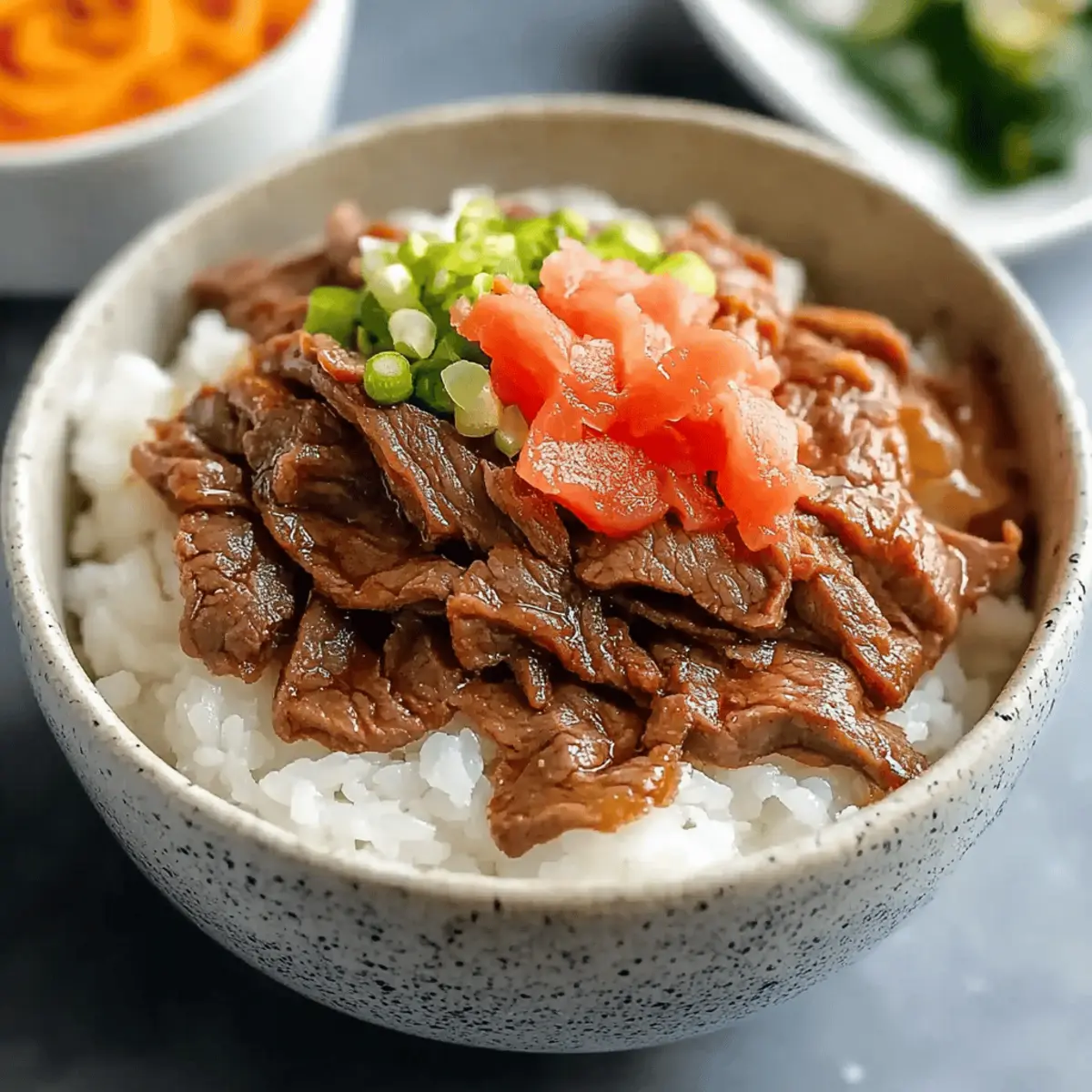
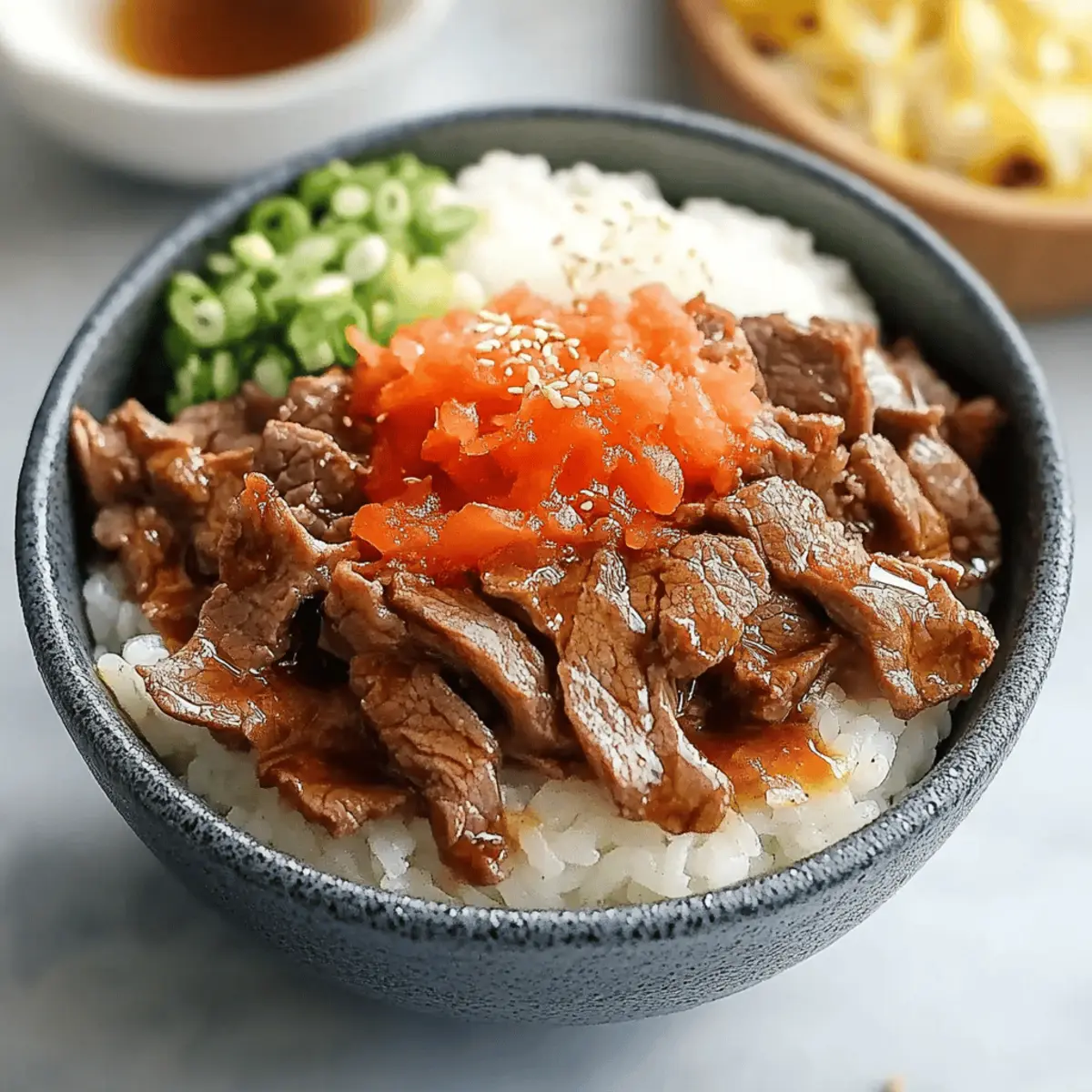
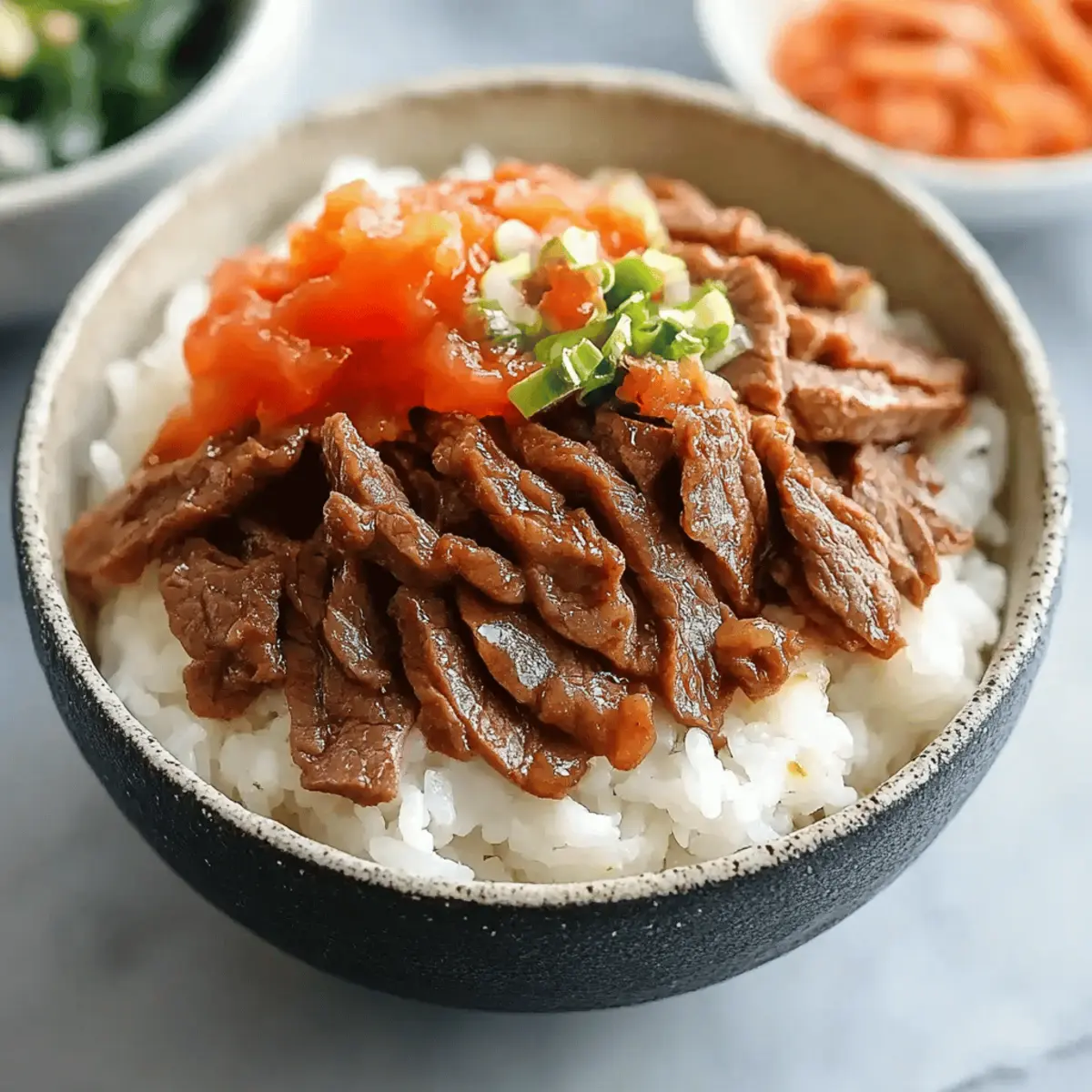
Once the beef is tender and the sauce has thickened, remove the saucepan from heat. Scoop warm Japanese rice into serving bowls and generously ladle the beef and sauce mixture over the top. Garnish with freshly sliced scallions and a sprinkle of red pickled ginger for a pop of color and flavor, elevating your delicious Gyudon Japanese Beef Bowls to a feast for the senses.
Make Ahead Options
These Gyudon Japanese Beef Bowls are perfect for meal prep enthusiasts! You can chop your onions and mix the sauce ingredients up to 24 hours in advance to save precious time on busy weeknights. For best results, refrigerate the prepped ingredients in airtight containers to maintain their freshness. You can also slice the beef ahead of time, but make sure to store it separately to prevent any browning. When you’re ready to enjoy your meal, simply sauté the prepped onions, add the beef and sauce, and simmer for about 5 minutes. This way, you’ll have a delicious and comforting Gyudon ready to serve with minimal effort!
Gyudon Japanese Beef Bowls Variations
Feel free to get creative and elevate your Gyudon bowls with these delightful twists!
-
Vegetarian Option: Replace beef with mushrooms or tofu for a satisfying vegetarian take on this classic dish. The umami flavor still shines through, making it a heartwarming meal.
-
Gluten-Free: Use tamari in place of soy sauce to enjoy a gluten-free version without sacrificing flavor. Your sensitive stomach will thank you for this thoughtful swap!
-
Extra Vegetables: Toss in some sautéed bell peppers, shiitake mushrooms, or snap peas for a nutritious boost. Not only does this add vibrant colors, but it also enhances the overall texture.
-
Sweet and Spicy: Add a kick by incorporating Sriracha or chili flakes into the sauce for a spicy twist. This elevates the savory profile, creating a tantalizing balance of heat and sweetness.
-
Rice Variations: Experiment with other grains like quinoa or brown rice for a different texture and flavor. It can also make for a healthier version while still capturing the essence of the dish.
-
Creamy Addition: Consider topping your Gyudon with a soft-boiled or poached egg for a rich creaminess. The golden yolk melts into the savory sauce, creating a luxuriously delicious experience.
-
Herb Garnish: Replace scallions with fresh cilantro or basil for a unique aromatic twist. These herbs can brighten your dish, imparting a punch of freshness that surprises the palate.
-
Sweet Kick: Mix in a splash of pineapple juice for sweetness and acidity. This fun twist creates an unexpected flavor profile, turning your meal into a delightful culinary adventure.
Feel free to explore these variations, and don’t hesitate to get inventive with your own personal touches!
How to Store and Freeze Gyudon Japanese Beef Bowls
Fridge: Store leftover beef and sauce in airtight containers for up to 2 days. Keep rice separate to maintain texture and prevent sogginess.
Freezer: Freeze cooked beef and sauce without rice for later use. They can be stored for up to 3 months. For best results, cool completely before sealing.
Reheating: When ready to enjoy, thaw in the fridge overnight, then reheat gently on the stovetop, adding a splash of water or sake to keep it moist.
Meal Prep: Consider making a double batch to freeze for quick meals later. These Gyudon Japanese Beef Bowls make for an easy weeknight dinner that you can heat up in minutes!
What to Serve with Gyudon Japanese Beef Bowls
Imagine creating a chorus of flavors and textures to elevate your cozy Gyudon dining experience.
- Miso Soup: A warm bowl of miso soup adds a soothing, salty contrast, complementing the savory beef and rice beautifully. The gentle umami of miso enhances the overall experience.
- Sautéed Greens: Try lightly sautéed bok choy or spinach. Their subtle bitterness provides a refreshing balance, while a drizzle of sesame oil adds nutty warmth.
- Pickled Vegetables: Serve with a side of pickled daikon or cucumbers for zingy crunch—introducing vibrant acidity to your plate enhances every bite.
- Soft-Boiled Eggs: Perfectly cooked and slightly runny, a soft-boiled egg adds creaminess to your Gyudon, enriching the flavor profile and adding a decadent touch.
- Japanese Beer: A chilled lager or ale offers a crisp, refreshing drink that cuts through the richness of the dish, making each bite even more enjoyable.
- Steamed Edamame: As an appetizer, steamed edamame sprinkled with sea salt will keep guests satisfied and engaged, making the dining experience interactive and fun!
- Sesame Spinach Salad: A lightly dressed spinach salad with toasted sesame seeds can break the richness with its bright flavors and crunchy texture, elevating each mouthful.
- Green Tea: A warm cup of green tea cleanses the palate and complements the meal, enhancing the overall taste experience with earthy undertones.
Let these sides inspire your own dinner adventures and enjoy the delicious harmony of flavors and textures they bring to your Gyudon Japanese Beef Bowls!
Expert Tips for Gyudon Japanese Beef Bowls
-
Beef Thickness Matters: Using thinly sliced beef ensures tenderness. If it’s too thick, the meat can become chewy, ruining your delicious Gyudon experience.
-
Simmer for Flavor: Allow the sauce to simmer before adding the beef; this builds incredible depth and richness in your dish.
-
Reheat with Care: When reheating, add a splash of water or sake to keep the beef moist, preventing it from drying out.
-
Rice Perfection: Rinse rice thoroughly to remove excess starch, ensuring a fluffy, sticky texture ideal for holding the savory sauce of your Gyudon.
-
Adapt with Veggies: Feeling creative? Add sautéed vegetables or switch to mushrooms or tofu for a delightful vegetarian Gyudon version.
Gyudon Japanese Beef Bowls Recipe FAQs
How do I choose the best beef for Gyudon?
Absolutely! For the best experience, use thinly sliced beef, preferably ribeye or sirloin, which provide tenderness and flavor. Ask your butcher if they can slice it thin for you; it really makes a difference in the final dish!
How should I store leftover Gyudon?
To store your Gyudon, keep the leftover beef and sauce in airtight containers for up to 2 days in the fridge. Be sure to store the rice separately to prevent it from getting soggy. When you're ready to enjoy it, you can quickly reheat the components!
Can I freeze Gyudon?
Yes, you can! I often freeze the cooked beef and sauce without the rice to enjoy later. Just let the beef and sauce cool completely, then place them in freezer-safe containers. You can freeze them for up to 3 months. When ready to enjoy, thaw them overnight in the fridge before reheating on the stovetop with a splash of water or sake to keep it tender.
What if my sauce is too salty?
If your sauce turns out too salty, try adding a little more sugar to balance it out. You can also add a splash of water to dilute it. If you have extra cooked rice, you can serve the beef over a bigger bed of rice, which helps absorb some of that saltiness, making it more enjoyable.
Can Gyudon be made vegetarian?
Very! Substitute the beef with mushrooms or tofu for a delicious vegetarian option. For mushrooms, I recommend using shiitake or portobello for a meaty texture. Simply follow the same cooking steps, adjusting the cooking time depending on what you choose. Enjoy experimenting with this adaptable recipe!
Is there a way to make Gyudon gluten-free?
Absolutely! To make your Gyudon gluten-free, switch to tamari instead of soy sauce, and opt for gluten-free dashi powder if available. Always check the labels on your other ingredients to ensure they are gluten-free as well!
Savory Gyudon Japanese Beef Bowls for Quick Comfort Cooking
Ingredients
Equipment
Method
- Heat olive oil in a medium saucepan over medium heat and sauté the thinly sliced onion for 3-4 minutes until translucent.
- Combine sauce ingredients (water, dashi powder, sugar, sake, mirin, ginger juice, soy sauce) into the saucepan; bring to a simmer for 2-3 minutes.
- Add thinly sliced beef to the sauce, ensuring it’s submerged. Simmer for about 5 minutes until beef is tender and pink color is gone.
- Prepare Japanese rice by rinsing under cold water and cooking with 1 and ¼ cups of water in a small pot for 15-20 minutes.
- Serve the beef and sauce over warm rice, garnished with scallions and red pickled ginger.


Leave a Reply